Portable Mortgages Explained: How They’d Work in San Diego
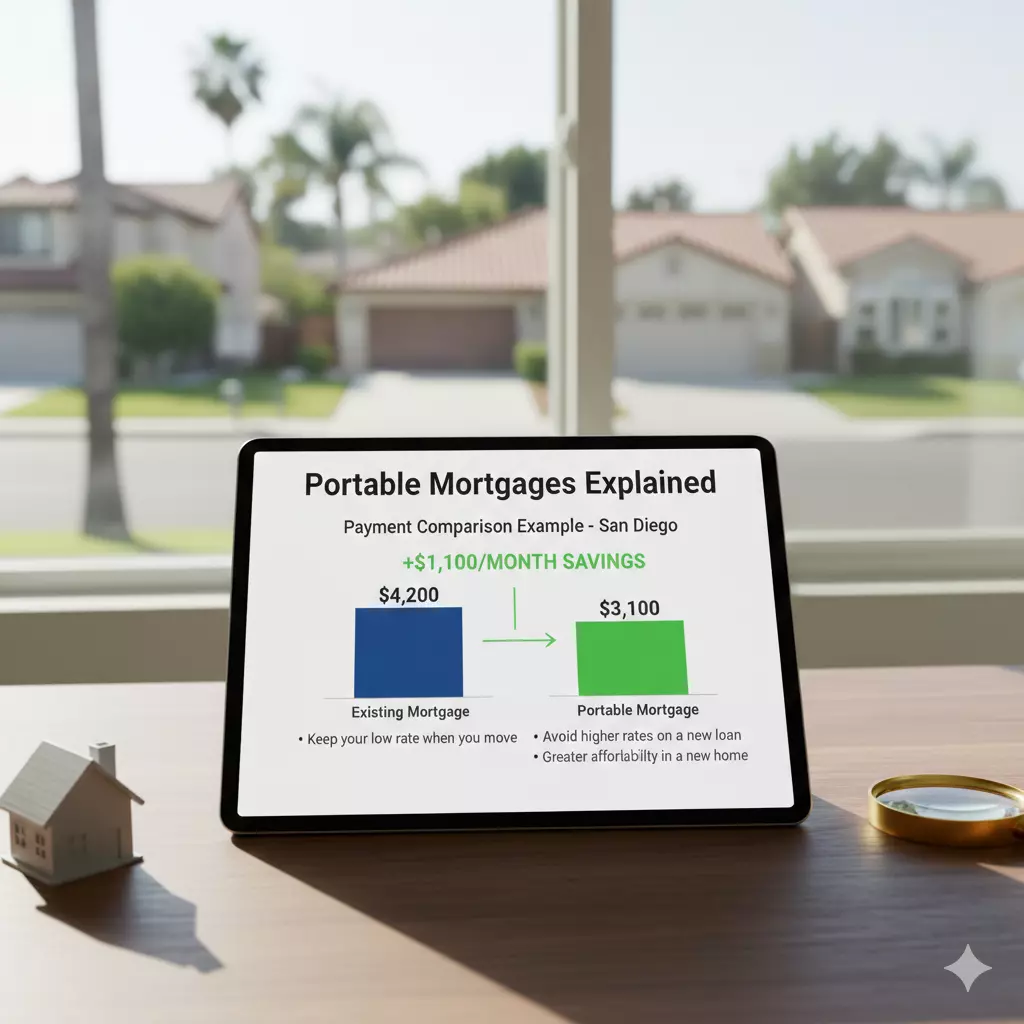
Portable Mortgages Explained: How They’d Work in San Diego
Portable mortgages are being talked about more for one reason: rate lock-in. Millions of homeowners are sitting on low-rate mortgages and don’t want to trade them for today’s higher rates just to move. FHFA research has tied this “lock-in effect” to sharply reduced mobility and fewer home sales.
A portable mortgage is the idea that you could move to a new home and keep the interest rate and core terms of your existing mortgage, transferring that financing to the new property (as long as you still qualify). These products are common in Canada and the UK, but they do not broadly exist in the U.S. today—which is exactly why they’re getting attention.
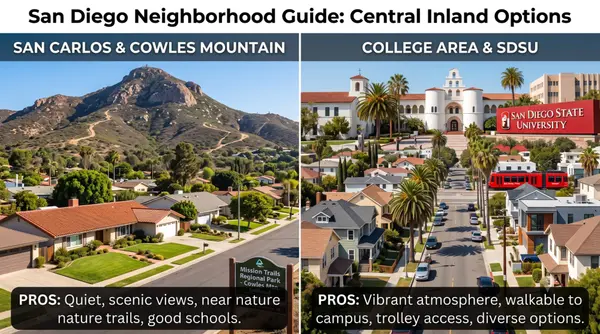
Below is what’s behind portable mortgages, how they’d work in real life, and what they could mean for neighborhoods like La Mesa, Del Cerro, El Cajon, Spring Valley, and the College Area.
What Is a Portable Mortgage?
A portable mortgage lets a homeowner buy a new house and keep their existing mortgage rate and terms, moving that financing from the old property to the new one—subject to lender rules and underwriting. Think of it as porting the deal, not literally picking up the same loan document and stapling it to a new address. UK lenders describe it as paying off the old mortgage and taking a new one with the same product terms on the new property, assuming you still qualify.
Key idea: your mortgage becomes tied more to you than to the house.
Why It’s in the conversation now
-
Current mortgage rates are still materially higher than the rates many homeowners have locked in (Freddie Mac’s weekly survey had the 30-year fixed averaging 6.06% as of Jan. 15, 2026).
-
FHFA research has linked lock-in to a major reduction in sales and mobility when rates rose.
-
Policy and industry groups are actively evaluating “portable mortgages” as one possible fix, with major tradeoffs.
How Portable Mortgages Would Work (Mechanics That Matter)
In markets where portability exists (Canada/UK), the typical rules look like this:
-
Same lender: Portability is usually within the same bank/lender.
-
You still re-qualify: Income, credit, and the new property must meet the lender’s current requirements.
-
Timing windows: Many programs require your sale and purchase to happen within a defined window.
-
If the new home costs more: you’d “port” the old balance and add a second piece of financing at current rates (often called “blend and extend” or “port and top-up,” depending on the country/lender).
-
If the new home costs less: you may have to pay down part of the mortgage balance when you move.
The U.S. reality check
The Bipartisan Policy Center sums it up plainly: portable mortgages “don’t exist in the U.S.” today at scale, in large part because the U.S. system is built around 30-year fixed mortgages and deep mortgage-backed securities markets—portability changes the risk profile for investors.
That doesn’t mean “no options.” It means today, the closest tools are:
-
Assumable loans (FHA/VA/USDA): the buyer assumes the seller’s rate/terms (different from portability, but it can “move” a low rate to the next owner).
-
Second loans / HELOCs for the gap (often expensive, but sometimes strategic).
-
Rate buydowns or seller credits in negotiation-heavy submarkets.
Portable vs. Assumable: Quick Comparison for San Diego Buyers and Sellers
| Feature | Portable Mortgage (idea) | Assumable Mortgage (real today) | Standard New Mortgage |
|---|---|---|---|
| Who keeps the old rate? | The current homeowner | The buyer takes seller’s loan | Nobody |
| Common in the U.S.? | Not broadly today | Yes for FHA/VA/USDA | Yes |
| Underwriting required? | Yes | Yes | Yes |
| Biggest friction | Secondary market + contract structure | Equity gap + process time | Payment shock at higher rates |
Real-Life Scenarios With Numbers (La Mesa, Del Cerro, El Cajon, Spring Valley, College Area)
To keep this grounded, here are current-ish local price anchors from late 2025:
-
La Mesa median sale price: $775,000 (Dec 2025)
-
Del Cerro median sale price: $1,270,000 (Dec 2025)
-
El Cajon median sale price: $715,000 (Dec 2025)
-
Spring Valley median sale price: $672,500 (Dec 2025)
-
College East (College Area pocket) median sale price: $997,500 (Dec 2025)
And for rates, we’ll use 6.06% as a current-market reference point.
(Examples below show principal + interest only, not taxes/insurance.)
Scenario 1: Move-up buyer — La Mesa to Del Cerro
Story: A La Mesa owner wants more house and schools, and targets Del Cerro.
-
Current mortgage balance: $550,000 at 3.00%, 27 years remaining
-
New purchase (Del Cerro median): $1,270,000
-
New needed financing after down payment/equity: assume $950,000 total debt on the new home
Without portability (all new debt at 6.06%):
-
$950,000 at 6.06% (30 yrs) → ~$5,732/mo
With portability (keep old rate + add new money):
-
Keep $550,000 at 3.00% (27 yrs) → ~$2,479/mo
-
Add $400,000 at 6.06% (30 yrs) → ~$2,414/mo
-
Total → ~$4,893/mo
Monthly difference: about $840/mo less with portability.
Why this matters in Del Cerro: If move-up homeowners can keep low rates, more of them can justify the jump from mid-$700k areas (La Mesa) into $1.2M+ neighborhoods (Del Cerro). That can increase bidding pressure at the top end—even if overall inventory improves. The Urban Institute has warned portability could come with higher initial rates and could also push prices upward because low-rate owners can pay more.
Scenario 2: Downsizer — Del Cerro to El Cajon (or Spring Valley)
Story: Empty nesters want to cut maintenance and move closer to family.
-
Current balance: $700,000 at 3.00%, 27 years remaining
-
New purchase target (El Cajon median): $715,000
-
If they put 20% down, their new mortgage target is about $572,000
Without portability (new loan at 6.06%):
-
$572,000 at 6.06% (30 yrs) → ~$3,452/mo
With portability (port to cheaper home, pay down the difference):
-
Port $572,000 at 3.00% (27 yrs) → ~$2,578/mo
-
They’d need to pay down the excess balance at closing (because the new home needs a smaller loan). This “new home cheaper” wrinkle is a known portability issue.
Monthly difference: about $874/mo less with portability.
Local implication: In places like El Cajon and Spring Valley, portability could increase “downsizer inventory” from higher-priced neighborhoods. That may create more listings in Del Cerro and more buyers competing in entry-to-mid price bands.
Scenario 3: College Area move — keeping a low rate while relocating locally
Story: A homeowner in Spring Valley wants to move closer to SDSU/College Area for commute and lifestyle.
-
College East median: ~$997,500
-
Spring Valley median: ~$672,500
If portability existed, the homeowner could:
-
Port their existing low-rate balance to the new home, and
-
Only finance the “gap” at market rates.
This is exactly the kind of move lock-in blocks today: owners don’t want to trade a sub-4% mortgage for a 6%+ mortgage just to shift neighborhoods. FHFA and Freddie Mac have both published on this mobility drag.
What Portable Mortgages Could Do to La Mesa, Del Cerro, El Cajon, Spring Valley, and the College Area
1) More listings (eventually), but not instantly
Portability targets the homeowner who wants to move but refuses to reset their rate. In theory, that frees up inventory.
But it wouldn’t be a switch that flips overnight. Lenders and investors would price in new risks, and underwriting would still apply.
2) Price pressure shifts, not disappears
One likely side effect: more purchasing power for low-rate owners, especially in move-up neighborhoods like Del Cerro and parts of the College Area. That can lift prices at the margin, even if total listings rise.
3) It would change negotiating leverage
If a buyer can keep a low rate:
-
They may tolerate a higher purchase price because their payment stays manageable.
-
Sellers may try to capture that value (similar to how low-rate assumable loans can become a marketing advantage).
4) It would reward “equity-rich” households
Whether it’s portability or assumability, the friction point is often the same: equity gap.
If your next home costs more than your existing mortgage balance, you still need cash or additional financing to bridge it.
The Tradeoffs Nobody Should Skip
Portable mortgages sound consumer-friendly. They are—but they’re not free.
-
Rates at origination could be higher to compensate investors for slower prepayments and longer duration (Urban Institute estimates as much as ~40 bps in some structures).
-
The U.S. contract and regulatory environment is not built for porting; adding portability is a major structural change, especially for closed-end contracts and disclosure rules.
-
Qualification still matters: job changes, debt-to-income, and property type can kill the transfer.
San Diego Home Buying and Financial Checklist HERE:
What San Diego Homeowners Can Do Right Now (Practical Moves)
Even without true portable mortgages today, you can still play smart:
-
Check for assumability if you’re shopping FHA/VA/USDA homes (and if you’re selling one).
-
Run payment comparisons by neighborhood (La Mesa vs. Del Cerro vs. College Area) before you fall in love with a house.
-
Model the equity gap early. The gap is usually the deal-breaker, not the interest rate.
-
Negotiate strategically: seller credits, temporary buydowns, or closing-cost structures matter more when the rate is the pain point.
If you’re considering a move in La Mesa, Del Cerro, El Cajon, Spring Valley, or the College Area, I can run breakdown what the 'comps' tell us in which direction a certain neighborhood is heading. Know Before You Go!
Portable Mortgage FAQ
What is a portable mortgage?
A portable mortgage lets you move to a new home while keeping the interest rate and key terms of your current mortgage—subject to lender rules and re-qualification.
Do portable mortgages exist in the United States today?
Not broadly. Policy groups note that portable mortgages don’t exist at scale in the U.S., even though they’re common in places like Canada and the UK.
What’s the difference between a portable mortgage and an assumable mortgage?
Portable means you keep your mortgage when you move. Assumable means the buyer takes over the seller’s existing mortgage (common with FHA/VA/USDA loans).
Why are portable mortgages common in Canada and the UK?
Those markets often use shorter fixed-rate periods and different funding structures, making portability more practical than in the U.S. 30-year fixed, securitized system.
Would I still need to qualify for the mortgage on the new home?
Yes. Porting typically requires underwriting and meeting the lender’s current criteria, even if you’re keeping the “deal.”
What happens if the new house costs more than my current home?
In portability systems, you usually port your existing balance and then borrow additional funds at current rates (or via a blended structure).
What happens if the new house costs less?
You may have to pay down part of the mortgage balance at closing because the new property needs a smaller loan.
Would portable mortgages lower home prices in San Diego?
Not automatically. They could increase listings by reducing lock-in, but they can also increase purchasing power for low-rate owners—potentially adding price pressure in desirable neighborhoods.
How would portability affect neighborhoods like La Mesa or Del Cerro?
It could make move-up moves more feasible (La Mesa → Del Cerro), and that can increase demand where inventory is already tight. Local price gaps make portability especially relevant.
What is “mortgage rate lock-in”?
It’s when homeowners stay put because their current mortgage rate is much better than market rates, reducing mobility and limiting inventory.
Are mortgage rates still high right now?
They’ve come down from peaks, but Freddie Mac’s weekly survey still put the 30-year fixed at 6.06% (Jan. 15, 2026).
If portable mortgages don’t exist here, what’s the closest alternative?
For many buyers and sellers, it’s an assumable FHA/VA/USDA loan (if available) plus a strategy to handle the equity gap.
Would portable mortgages eliminate closing costs?
No. Even if you kept your rate, you’d still have transaction costs: appraisal/underwriting, escrow, title, recording, and other move-related expenses.
If portable mortgages become available, would everyone qualify?
No. Qualification, property standards, timing windows, and lender overlays would likely limit who can actually use them.
How can I estimate whether portability (or an assumable loan) would help me?
You compare:
-
your current rate/balance and remaining term,
-
the new home price and how much debt you’d need, and
-
the rate on any “gap” financing.
That’s the real decision math.
Chris Melingonis - The Realtor Dad

With almost two decades of experience in the real estate market, I have dedicated my career to helping families buy and sell homes in La Mesa and San Diego, California. My extensive knowledge of the local market allows me to provide valuable insights and guidance, ensuring my clients feel confident and informed throughout the entire process. I understand that real estate transactions can be daunting, which is why I prioritize education and clear communication to help my clients navigate even the most challenging situations.
My unique marketing plan is designed to get homes sold quicker and at maximum value. By leveraging cutting-edge technology and innovative strategies, I showcase properties in a way that attracts potential buyers and stands out in the competitive San Diego market. I am committed to using my experience to tailor my approach to each client's specific needs, ensuring a seamless experience from start to finish.
Whether you are a first-time homebuyer or looking to sell your cherished property, I am here to guide you every step of the way. My focus on building lasting relationships and providing exceptional service has earned me the trust of many families in our community. Together, we can make your real estate dreams a reality.
Recent Posts