What Seller Credits and Rate Buydowns Mean in 2026
What Seller Credits and Rate Buydowns Mean in 2026
In 2026, seller credits and rate buydowns aren’t “nice-to-have” concessions. They’re one of the cleanest ways to get deals done without cutting the headline price—especially in East County San Diego markets like La Mesa, Del Cerro, Spring Valley, and El Cajon, where buyers stay payment-sensitive and sellers still care about appraisals and comps.
If you’re hearing “credit for closing costs” or “2-1 buydown” in agent remarks and wondering what it really means for negotiation leverage, this is the practical breakdown.
Credits are one tool. Here's my complete La Mesa seller guide.
Seller credits in 2026: what they actually do
A seller credit is money the seller agrees to contribute toward the buyer’s approved closing costs and prepaid items. Think: lender fees, escrow, title, and potentially prepaid taxes/insurance—depending on the loan and program.
In 2026, seller credits are being used to solve one problem: cash to close. That’s especially true for first-time buyers and move-up buyers trying to keep reserves after closing.
Common East County seller credit uses:
-
Closing costs (lender + escrow/title)
-
Prepaids (homeowners insurance, taxes, interest)
-
Temporary rate buydown (more on that next)
-
Repairs or credits in lieu of repairs (when time matters)
Seller credits can be cleaner than a price reduction when:
-
The buyer qualifies on the payment but is short on cash-to-close.
-
The seller wants to protect the comp value on the block.
-
You’re trying to keep the appraisal narrative strong in a tract or tight comp set.
Why this hits differently in La Mesa, Del Cerro, Spring Valley, and El Cajon
East County buyers tend to be value-driven. They’ll pay for the right house, but they’re quick to walk when the monthly payment feels stretched. Seller credits let you directly attack payment friction without advertising a discount.
Also, many neighborhoods here have mixed housing stock—renovated vs. original condition on the same street. Credits can bridge that gap when the buyer wants the location but knows they’ll be spending money after closing.
Rate buydowns in 2026: temporary vs. permanent
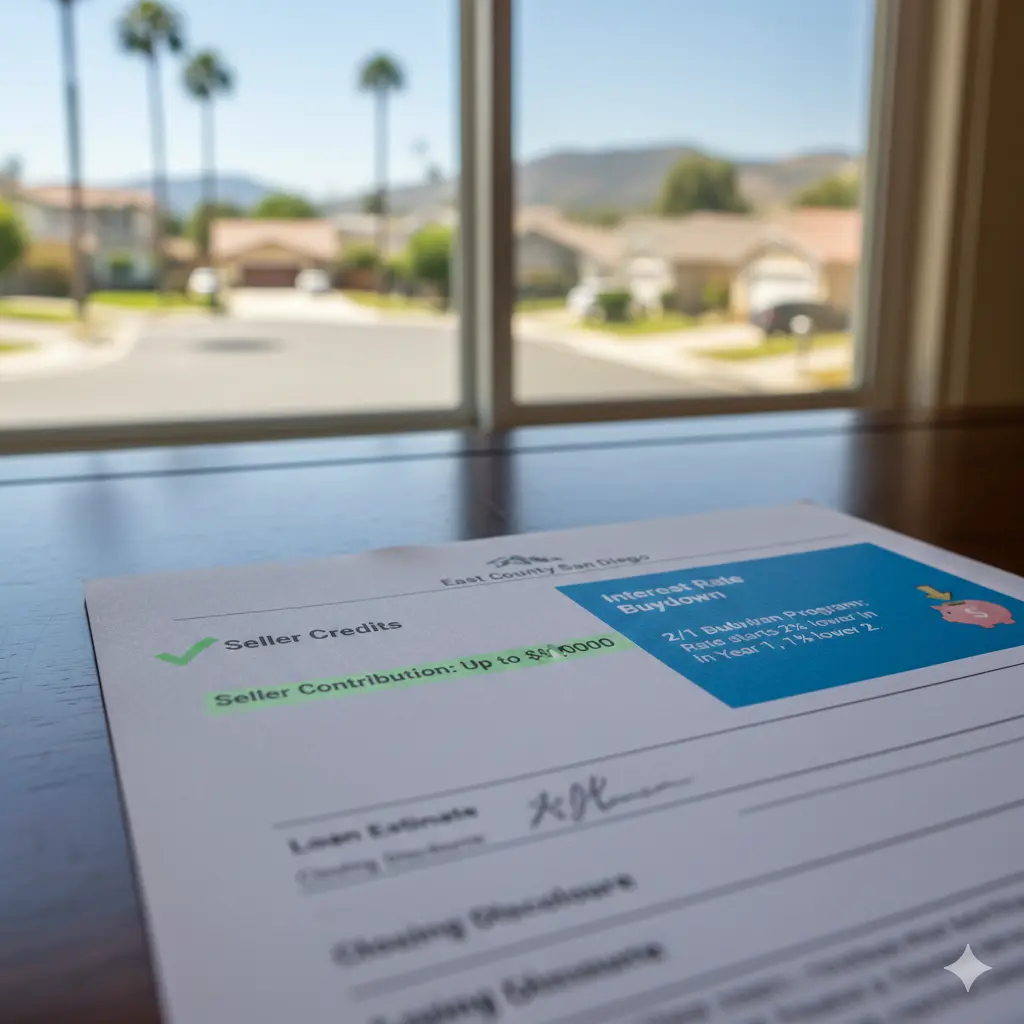
A rate buydown is when money is paid upfront to reduce the buyer’s interest rate. In practice, it’s often funded by a seller credit (or builder incentive), but it can also be buyer-paid.
There are two main types:
Temporary buydown (like a 2-1 or 1-0)
A temporary buydown reduces the rate for the first year or two, then it steps up to the note rate.
Why buyers like it in 2026:
-
It lowers the payment early—right when budgets are tight after moving.
-
It gives breathing room while waiting for income increases, bonuses, or a future refinance opportunity (not guaranteed).
Why sellers like it:
-
It’s a concession that feels substantial to the buyer.
-
It often costs less than a large price reduction, while improving affordability.
Permanent buydown (paying points)
A permanent buydown reduces the rate for the full loan term, typically by paying discount points.
In 2026, permanent buydowns show up when:
-
The buyer is planning to stay long-term.
-
The seller is motivated but wants a strategic concession.
-
The listing is competing with a more updated home nearby.
Why seller credits and buydowns matter more than price cuts in 2026
In a payment-driven market, monthly cost is the deal, not the sale price. A $20,000 reduction might not move the payment as much as buyers expect—especially once you factor in taxes and insurance.
Meanwhile, a structured seller credit applied to a buydown can:
-
Make the buyer’s payment feel meaningfully lower right now.
-
Increase the pool of qualified buyers.
-
Help a home stand out against similar listings in La Mesa, Del Cerro, Spring Valley, and El Cajon.
In plain terms: credits and buydowns influence buyer behavior faster than price reductions because they target the pain point buyers talk about every day.
What sellers should watch before offering credits in East County
Seller credits aren’t free money. They’re negotiated, and they have rules.
Key realities in 2026:
-
Loan type matters. Different loan programs cap how much a seller can contribute.
-
Appraisal still matters. A credit doesn’t fix an overpriced listing.
-
Net proceeds are king. Credits reduce your net just like a price cut—sometimes with better results.
Seller strategy that works in East County:
-
Offer a credit range tied to strong terms (shorter contingencies, clean financing, solid deposit).
-
Use credits to offset condition when the home is original but well-maintained.
-
If you’re in a pocket of La Mesa or Del Cerro where comps are tight, consider credits before chopping price—protect the comp story.
What buyers should ask for in 2026 before accepting a buydown
Buydowns can be smart. They can also be misunderstood.
Buyers should clarify:
-
Is this a temporary or permanent buydown?
-
What is the note rate after the buydown period?
-
How much of the credit is being used for buydown vs. closing costs?
-
Does the lender’s pricing make the buydown efficient versus other options?
Practical buyer guidance for East County:
-
If you plan to move within a few years, a temporary buydown may match your timeline better.
-
If you’re buying a “forever-ish” home in a La Mesa or Del Cerro school pocket, a permanent buydown may pencil out.
-
If you’re tight on cash-to-close, prioritize closing costs first, then consider a buydown.
How this plays out in La Mesa, Del Cerro, Spring Valley, and El Cajon negotiations
Here’s what’s happening on the ground in 2026:
La Mesa
Buyers often pay for walkability, charm, and renovation quality. Seller credits show up when a home is well-located but has an older roof, dated kitchen, or deferred maintenance. A credit can keep the deal together without turning the listing into a “price drop watch.”
Del Cerro
Del Cerro buyers frequently focus on condition and layout. When a home is original but in a prime pocket, seller credits can be the bridge—especially when buyers want to reserve cash for post-close improvements.
Spring Valley
Spring Valley negotiations can be more payment-focused. Credits and buydowns help bring more buyers into range, particularly when competing listings feel similar. The right concession can be the difference between sitting and selling.
El Cajon
El Cajon often has strong demand at entry-level price points. When rates pinch affordability, buydowns funded via seller credits can widen your buyer pool quickly—especially for FHA and VA-style buyer profiles (loan eligibility depends on the buyer).
Action steps for 2026: how to use seller credits and buydowns strategically
For sellers in East County San Diego
-
Price to the comp story first. Then use credits to close the gap.
-
Offer credits tied to strong terms, not weak offers.
-
If your home has condition friction, lead with a credit instead of chasing the market with multiple reductions.
For buyers in La Mesa, Del Cerro, Spring Valley, or El Cajon
-
Don’t just ask for “a credit.” Ask for a credit that solves your problem: cash-to-close, payment, or repairs.
-
Run side-by-side scenarios: price reduction vs. credit vs. buydown.
-
Make sure your offer structure matches your timeline.
Bottom line: seller credits and rate buydowns are a 2026 power tool in East County
In 2026, seller credits and rate buydowns in East County San Diego are less about “giving in” and more about engineering a deal that clears underwriting and feels affordable to the buyer.
In La Mesa, Del Cerro, Spring Valley, and El Cajon, the listings that move are the ones that reduce payment stress and negotiation friction—without damaging the comp narrative.
BLOG: Rancho San Diego and East County FAQ - 9 Things Buyers Need To Know
FAQ: Seller Credits and Rate Buydowns in 2026 (East County San Diego)
What is a seller credit in 2026, and why do buyers care?
A seller credit is money the seller agrees to contribute toward the buyer’s approved closing costs and prepaid items. For first-time and move-up buyers in East County San Diego—especially La Mesa, Del Cerro, Spring Valley, and El Cajon—credits matter because they reduce cash-to-close and help buyers keep reserves.
Can I use a seller credit to cover my closing costs?
Often, yes. Credits are commonly applied to lender fees, escrow, title, and certain prepaids. Your lender should confirm what’s eligible for your specific loan before you write the offer.
Are seller credits common in La Mesa in 2026?
Yes—particularly when a La Mesa home is priced near the top of the comp range or has “good bones” but needs cosmetic updates. Sellers often prefer a credit for closing costs or a temporary buydown over a visible price reduction that impacts comps.
How do rate buydowns help buyers competing in Del Cerro?
Del Cerro buyers often pay for location, layout, and condition. A rate buydown can help you keep your offer competitive while staying inside your payment comfort zone—especially when you’re balancing a move-up budget with family expenses.
What is a rate buydown?
A rate buydown is when money is paid upfront to reduce your mortgage interest rate. It’s often funded by a seller credit and can lower your monthly payment—helpful in 2026 when buyers are still highly payment-sensitive.
What’s the difference between a 2-1 buydown and a permanent buydown?
-
2-1 buydown (temporary): Your rate is reduced for the first two years, then returns to the note rate in year three.
-
Permanent buydown: Your rate is reduced for the full loan term by paying discount points upfront.
Temporary buydowns help early-year payment stress. Permanent buydowns help long-term planning.
Is a 2-1 buydown a good idea for first-time buyers in 2026?
It can be, if the lower initial payment helps you transition into homeownership without draining reserves. Just make sure the payment at the full note rate still fits your budget when the buydown period ends.
What’s a smart seller credit strategy for Spring Valley homes?
In Spring Valley, credits are often used to solve affordability and keep offers moving. A common approach is to request a credit that covers closing costs first, then apply remaining funds to a 1-0 or 2-1 buydown if it improves payment comfort.
Are seller credits and buydowns used differently in El Cajon?
Often, yes. In El Cajon, credits frequently show up as closing cost help to reduce cash-to-close—especially for buyers who need space but want to keep savings. Buydowns can also work when monthly payment is the main hurdle in a competitive price band.
Is it better to ask for a price reduction or a seller credit in East County San Diego?
It depends on your constraint:
-
If you’re short on cash-to-close, a seller credit usually helps more.
-
If you’re concerned about appraisal risk or want a lower loan amount, a price reduction can be cleaner.
In 2026, many East County buyers prefer credits because they solve the “cash + payment” problem faster.
Can I get a seller credit and a rate buydown at the same time?
Sometimes. Many transactions prioritize closing costs and prepaids first, then apply remaining credit to a buydown. The structure depends on the loan program, lender rules, and the maximum allowable seller contribution.
Do seller credits have limits?
Yes. Contribution caps depend on loan type, down payment, occupancy, and lender overlays. The practical move: have your lender confirm the maximum seller credit allowed before you submit an offer.
Does asking for a seller credit hurt my chances in a multiple-offer situation in La Mesa or Del Cerro?
It can—unless you package it well. Credit requests win more often when paired with:
-
Strong pre-approval (ideally underwritten)
-
Clean timelines and reasonable contingencies
-
A clear purpose for the credit (closing costs and/or buydown)
The goal is to make the seller feel confident the deal will close.
If I’m buying in East County San Diego, should I ask for a credit or a buydown?
Start with what’s actually tight:
-
If your issue is cash-to-close, prioritize a seller credit.
-
If your issue is monthly payment, explore a temporary buydown (or permanent if you’re staying long-term).
Your lender should run side-by-side scenarios so you can choose the best outcome.
What should move-up buyers with kids prioritize when negotiating credits in East County?
Move-up buyers with families often do best when they protect reserves. Credits can keep cash available for moving costs, repairs, childcare transitions, and the “first-year surprises” that come with a bigger home.
Can seller credits cover repairs for older homes in La Mesa or El Cajon?
Sometimes—especially as a credit in lieu of repairs when timing is tight. The key is documenting it properly and confirming lender requirements. In many cases, sellers and buyers still choose repairs for safety or lender-required items.
How do credits and buydowns impact the appraisal?
Appraisals are based on comps and market adjustments. Concessions must be disclosed and can matter if they’re excessive, but the bigger issue is pricing: a credit won’t fix a home priced above the comp range.
Will a rate buydown guarantee I can refinance later?
No. Refinancing depends on future rates, income, credit, and home value. A buydown should be a strategy you can live with even if you never refinance.
What’s the biggest mistake buyers make with rate buydowns in 2026?
Assuming the future will save them. If the payment at the full note rate won’t work later, a buydown is temporary relief—not a long-term plan.
How do I know the seller credit amount I’m requesting is allowed?
Ask your lender to confirm the maximum allowable seller contribution for your loan type and down payment before you write the offer. That prevents renegotiations mid-escrow.
What’s a clean way to ask for a seller credit in 2026?
Make it specific and tied to terms. Example: request a credit to cover closing costs and/or fund a buydown, paired with strong financing and clean timelines. Sellers respond better when the credit is clearly part of a closing plan.
Chris Melingonis - The Realtor Dad | La Mesa Realtor

With almost two decades of experience in the real estate market, I have dedicated my career to helping families buy and sell homes in La Mesa and San Diego, California. My extensive knowledge of the local market allows me to provide valuable insights and guidance, ensuring my clients feel confident and informed throughout the entire process. I understand that real estate transactions can be daunting, which is why I prioritize education and clear communication to help my clients navigate even the most challenging situations.
My unique marketing plan is designed to get homes sold quicker and at maximum value. By leveraging cutting-edge technology and innovative strategies, I showcase properties in a way that attracts potential buyers and stands out in the competitive San Diego market. I am committed to using my experience to tailor my approach to each client's specific needs, ensuring a seamless experience from start to finish.
Whether you are a first-time homebuyer or looking to sell your cherished property, I am here to guide you every step of the way. My focus on building lasting relationships and providing exceptional service has earned me the trust of many families in our community. Together, we can make your real estate dreams a reality.
Recent Posts