San Diego's Proposed Second-Home Tax: The La Mesa Impact

San Diego’s Proposed Second-Home Tax: The La Mesa Impact
San Diego just took the first formal step toward a San Diego vacant second home tax that could reshape how short-term rentals and “non-primary” homes pencil out across the region. Councilmember Sean Elo-Rivera’s “Vacation Home Operation Tax to Preserve Housing” advanced out of the City Council’s Rules Committee on Oct. 22, 2025, with the goal of putting it in front of voters in June 2026.
If you’re in East County—especially La Mesa—here’s the key: La Mesa is not in the City of San Diego, so this specific tax would not apply to La Mesa properties. But it can still move your market through spillover: investor behavior, rental supply shifts, and buyer demand along the La Mesa/College Area/Rolando border.
What the San Diego vacant second home tax would do
The proposal targets two categories inside City of San Diego limits:
-
Vacant second homes (not someone’s primary residence)
-
Full-time, whole-home short-term rentals (Airbnb-style “hotel” operations)
The headline number is what gets attention: up to $5,000 per bedroom, per year.
Supporters argue the point is simple: if a home is functioning as a business (or sitting empty), it should contribute more to city services and housing solutions. Opponents argue it punishes property rights and small operators, and could create other downstream impacts.
Where this stands now and what happens next
This is not law yet. It’s a ballot-measure path.
Here’s the current timeline based on City Hall reporting:
-
Rules Committee voted 3–1 to advance it for further work.
-
It returns for details early next year (policy language, exemptions, enforcement).
-
Full Council would need to approve it in time for a June 2026 vote.
The city’s own agenda summary notes the tax would not apply to owner-occupied primary residences or long-term rentals, and that additional exemptions are being discussed to avoid unintended harm to residents.
Why La Mesa homeowners and buyers should care anyway
Even though La Mesa sits outside San Diego city limits, markets don’t stop at municipal borders. When you change the math for investors in one jurisdiction, activity often shifts to the next most logical zip codes.
1) Investor “map shifts” are real—and East County is the next stop
If a City of San Diego operator is staring at a large new annual cost, they have three realistic options:
-
Convert to long-term (or mid-term) rental
-
Sell
-
Shift future purchases to nearby cities not subject to the tax (La Mesa, El Cajon, Lemon Grove, Santee, etc.)
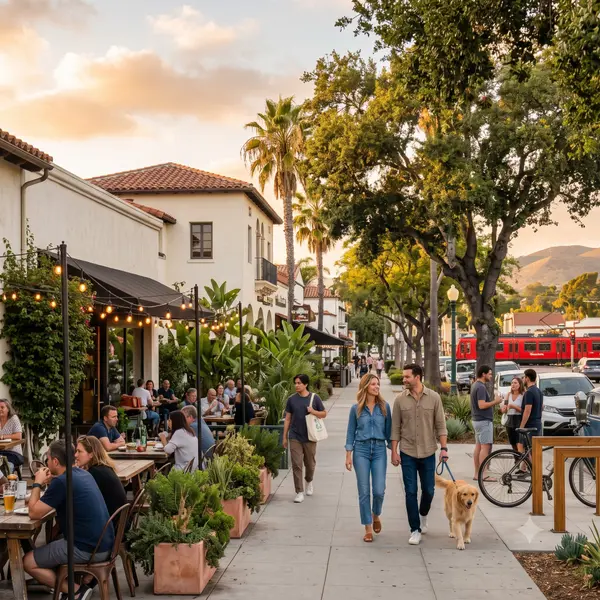
That last option is where East County gets interesting—especially areas with walkability, village-style downtowns, and freeway access (La Mesa checks all three). It’s not hard to see how demand could drift east if ownership costs rise inside the city.
2) Border neighborhoods will feel it first
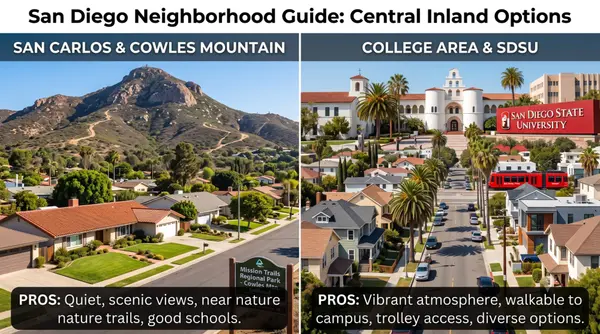
La Mesa runs up against City of San Diego neighborhoods like Rolando, College Area, and parts of San Carlos/Del Cerro. If more homes inside the city convert from STR to long-term, you may see:
-
More rental inventory in those adjacent SD neighborhoods
-
Pressure relief on rents (at least locally), depending on how many actually convert
-
Buyers who were priced out of the city pushing harder into La Mesa’s inventory
That’s not a guarantee. But it’s a realistic “watch list” scenario if the measure gains traction.
3) It could change what sells fastest in La Mesa
If investor demand increases (even modestly), it typically concentrates on:
-
Smaller single-family homes with ADU potential
-
Duplexes/small multifamily
-
Properties near La Mesa Village / trolley access / quick downtown commute
For owner-occupants, that means competition could tighten on “entry-level” product—the same segment many first-time buyers already fight over.
A practical East County comparison
| Topic | City of San Diego (affected) | La Mesa (not directly affected) |
|---|---|---|
| Would the proposed tax apply? | Yes, if not primary residence / full-time STR | No, different city jurisdiction |
| Cost discussed | Up to $5,000 per bedroom/year | N/A |
| Likely market effect | STR conversions, investor re-pricing | Possible spillover demand from investors/buyers |
What to do now if you own property in La Mesa or East County
If you’re a homeowner
-
Watch for investor attention to La Mesa as this measure moves toward the ballot.
-
If you’re considering selling in 2026, track how inventory and days-on-market behave in nearby SD neighborhoods first.
If you’re a buyer
-
Don’t assume La Mesa is “immune” from policy changes next door.
-
If you want La Mesa Village proximity, be ready—those listings are the most likely to see extra competition.
If you’re an investor
-
If you operate inside the City of San Diego, model your downside: $5,000/bedroom/year is not a rounding error.
-
If you’re focused on La Mesa, remember: today’s exemption is jurisdictional, not permanent. If this becomes a successful revenue model, other cities could study it later (even if they don’t copy it).
La Mesa Housing Market Update
The bottom line for La Mesa
The San Diego vacant second home tax is aimed at City of San Diego vacation-home operations, but the behavioral impact can spill into East County. The closer you are to the city line—and the more your neighborhood appeals to buyers who want San Diego access without coastal pricing—the more you should pay attention.
If you want, I can pull a quick “border-market watch” for La Mesa: which nearby City of San Diego neighborhoods share buyer pools with La Mesa, and what listing activity there typically signals 30–90 days later for La Mesa values.
FAQ Section
Frequently Asked Questions
Does the San Diego vacant second home tax apply in La Mesa?
No. La Mesa is a separate city from the City of San Diego, so a City of San Diego measure would not directly apply to La Mesa properties.
If it doesn’t apply in La Mesa, why should East County homeowners care?
Because policy changes can shift buyer and investor behavior. If operating costs rise inside the City of San Diego, some investors may sell, convert to long-term rentals, or shift future purchases into nearby cities like La Mesa. That can affect competition and pricing.
What properties would the proposed tax target (inside the City of San Diego)?
The proposal focuses on vacant second homes and full-time, whole-home short-term rentals (vacation-home “hotel” style operations), not owner-occupied primary residences.
How much could the tax be?
The number being discussed is up to $5,000 per bedroom per year (inside the City of San Diego), depending on final language and how the measure is structured.
Would this tax impact long-term rentals?
As proposed, the goal is to avoid penalizing traditional long-term rentals. The details matter, though—definitions and exemptions are where these measures either work cleanly or create unintended consequences.
What’s the timeline? When would this actually happen?
This is still in the proposal phase. The path discussed publicly is a June 2026 ballot vote, meaning nothing changes until voters approve it and implementation rules are finalized.
Could La Mesa adopt something similar later?
La Mesa is not obligated to follow San Diego’s lead. However, if a policy becomes a proven revenue tool (or politically popular), other cities sometimes evaluate similar approaches. It’s not a prediction—just something to monitor.
Could this push more rentals into the market near La Mesa?
Possibly. If some City of San Diego STR operators convert to long-term rentals, border areas near La Mesa (like the College Area/Rolando side) could see more rental inventory. Whether that materially affects rents depends on how many units convert.
As a La Mesa homeowner, what should I watch for in 2026?
-
Investor activity on smaller homes and ADU-friendly lots
-
Changes in days on market and buyer competition in La Mesa Village-adjacent neighborhoods
-
Pricing and inventory shifts in nearby City of San Diego “border” neighborhoods that share the same buyer pool
What should buyers do if they’re planning to purchase in La Mesa?
Have a clear plan for financing and timelines. If spillover demand increases, the most competitive segment is usually entry-level single-family homes and anything walkable to the Village/trolley access.
Chris Melingonis - The Realtor Dad

With almost two decades of experience in the real estate market, I have dedicated my career to helping families buy and sell homes in La Mesa and San Diego, California. My extensive knowledge of the local market allows me to provide valuable insights and guidance, ensuring my clients feel confident and informed throughout the entire process. I understand that real estate transactions can be daunting, which is why I prioritize education and clear communication to help my clients navigate even the most challenging situations.
My unique marketing plan is designed to get homes sold quicker and at maximum value. By leveraging cutting-edge technology and innovative strategies, I showcase properties in a way that attracts potential buyers and stands out in the competitive San Diego market. I am committed to using my experience to tailor my approach to each client's specific needs, ensuring a seamless experience from start to finish.
Whether you are a first-time homebuyer or looking to sell your cherished property, I am here to guide you every step of the way. My focus on building lasting relationships and providing exceptional service has earned me the trust of many families in our community. Together, we can make your real estate dreams a reality by contacting me HERE:
Recent Posts