How to Sell a House in San Diego: A Step-by-Step Seller Playbook (With La Mesa Tips)
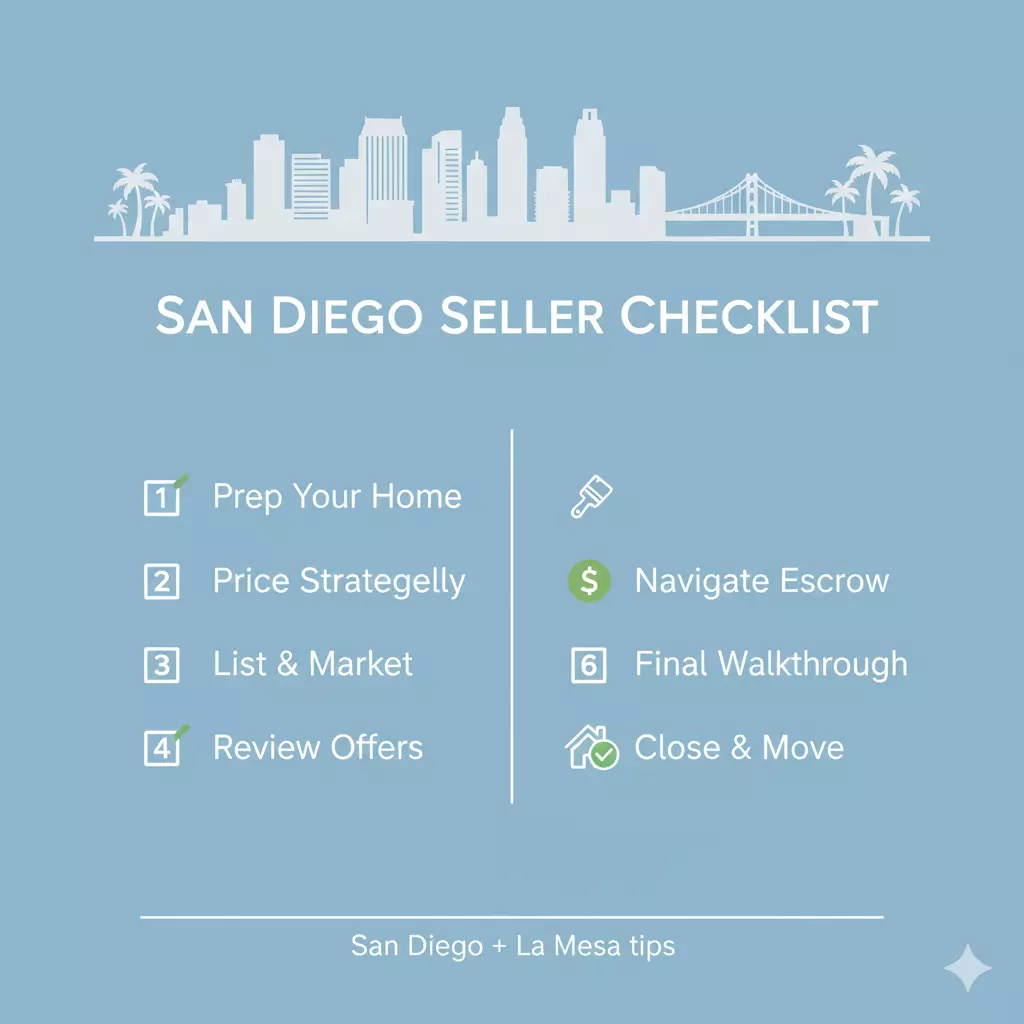
How to Sell a House in San Diego: A Step-by-Step Seller Playbook (With La Mesa Tips)
If you’re Googling how to sell a house in San Diego, you probably want two things: a clear plan and fewer surprises.
This guide is the plan.
You’ll learn the exact steps to sell, what to prep (and what to skip), how escrow works in San Diego County, what costs to expect, and how to sell while buying your next home without your family living out of boxes for a month.
Educational content only. Not legal or tax advice. For legal, tax, or permit questions, talk to a licensed attorney, CPA, and the right local pros.
Quick answer: How do you sell a house in San Diego?
To sell a house in San Diego, you (1) choose a selling strategy, (2) set a pricing plan based on comps and market pace, (3) prep the home for photos and showings, (4) list and market it, (5) negotiate offers, (6) complete disclosures and inspections during escrow, and (7) close with escrow/title.
The 10-step San Diego seller checklist
- Decide your selling path: list traditionally, sell as-is, or explore a cash offer.
- Talk to a local agent and set a timeline that matches your move.
- Price using recent comparable sales and current demand.
- Do targeted prep: paint, clean, lighting, curb appeal.
- Get pro photos (and video if it fits your price point).
- List on the MLS and launch marketing.
- Review offers and negotiate terms, credits, and timing.
- Open escrow and deliver required disclosures. (California has rules here.)
- Inspections, appraisal, repairs or credits, then final sign-off.
- Close escrow, hand off keys, and move on with your life.
1) What’s the best way to sell in San Diego: list it, sell as-is, or take a cash offer?
Direct answer: Most San Diego homeowners net the most by listing on the open market, but “as-is” or cash offers can make sense if speed and certainty matter more than top dollar. Investor-style “sell fast” options trade price for convenience.
Here are the three common paths:
Traditional listing (most common)
- Best when you want max exposure and top price.
- You’ll prep, market, show, and negotiate.
“As-is” listing (still public market)
- You list on the MLS, but you don’t promise repairs.
- You still disclose what you know. “As-is” is not a magic invisibility cloak.
Cash offer / investor purchase
- Fast closing, fewer showings, less prep.
- Usually a lower price than a competitive, well-marketed listing.
Practitioner note: When clients ask, “What’s the easiest way?” my follow-up is always: Easy for you, or easy for the buyer? Because those are rarely the same thing.
2) When is the best time to sell a house in San Diego?
Direct answer: In many years, early spring brings the biggest wave of buyers, but the “best” time depends on your neighborhood, competition, and your next move. In San Diego, timing also shifts with school schedules, military moves, and inventory changes.
Instead of guessing, use a simple approach:
- Look at how fast homes are going pending right now in your zip code.
- Compare active listings (your competition) to sold comps (what buyers actually paid).
- Decide if you want a fast sale, a top price attempt, or a balance.
La Mesa timing note
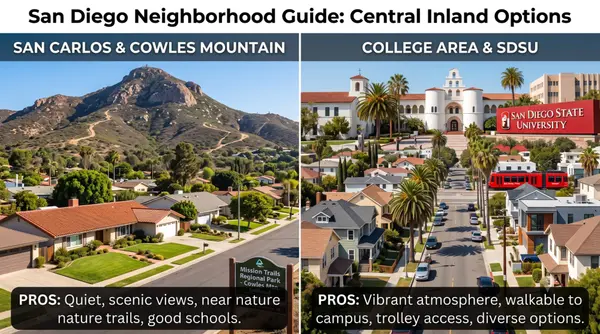
La Mesa can behave differently than coastal areas. Buyers often cross-shop El Cajon, San Carlos, and College Area, so your pricing and prep need to match what those buyers are seeing.
3) How do you price a house in San Diego without leaving money on the table?
Direct answer: You price by comparing your home to recent nearby sales, adjusting for features and condition, then choosing a strategy that fits demand and competition. Pricing affects days on market, negotiation leverage, and your final net.
Pricing is not “pick a number and hope.” It’s a plan.
A simple pricing method that works
- Pull the best comps (similar size, lot, condition, same micro-area).
- Separate comps into:
- “Most similar” (your anchor comps)
- “Close but not perfect” (supporting comps)
- Adjust for:
- Views vs no views
- Updated vs original
- Solar owned vs leased
- ADU potential or actual ADU
- Decide your strategy:
- Conservative (price to sell fast)
- Competitive (invite multiple offers)
- Ambitious (test the ceiling with a plan B date)
Practitioner note: In my experience, the overpriced listing doesn’t “hold firm.” It usually sells later for less, after extra carrying costs and too many awkward showings.
4) What should you fix before selling in San Diego?
Direct answer: Focus on the repairs and updates that reduce buyer fear: clean, bright, functional, and well-maintained beats fancy. Your goal is fewer objections during showings and fewer renegotiations during escrow.
Here’s the prep list that pays off most often:
Do this first (high impact, lower drama)
- Deep clean like you’re trying to get your deposit back.
- Touch-up paint or repaint high-traffic areas.
- Fix obvious “small stuff” (sticky doors, broken outlets, leaks).
- Boost curb appeal: trim, mulch, pressure wash, clean windows.
- Swap harsh or dead bulbs for consistent lighting.
Think twice before doing this
- Full kitchen remodel
- Major bath remodel
- Custom upgrades that won’t match neighborhood values
If your home is in Del Cerro, San Carlos, College Area, La Mesa, or El Cajon, many buyers still want “solid bones” more than luxury finishes. But they do want to feel confident about big-ticket items.
Pre-list inspection: worth it?
Sometimes. It can reduce surprises and speed negotiations, especially if you expect buyers to be picky.
Good times for a pre-list inspection:
- Older homes
- Homes with visible wear
- Homes with known quirks (aging roof, older electrical)
5) What do you have to disclose when selling a house in California?
Direct answer: California sellers typically provide multiple disclosures about the property’s condition and other material facts. These disclosures protect buyers and reduce legal risk for sellers. For the exact forms and rules, use California’s Department of Real Estate guidance and your escrow/agent team.
Disclosures are where a lot of deals get weird. Not because the house is bad. Because the paperwork shows up late, incomplete, or sloppy.
Common disclosure categories (plain English)
- What you know about the home’s condition
- Known defects or past issues
- Repairs and improvements
- Natural hazard disclosures (varies by location)
- HOA docs if you’re in an HOA (CC&Rs, budget, rules)
Practitioner note: Many “renegotiations” are really “I just found out something I should’ve known earlier” moments. A clean disclosure package makes buyers calmer. Calm buyers don’t blow up escrow.
6) How does escrow work in San Diego County and how long does it take?
Direct answer: After you accept an offer, escrow begins. Buyers complete inspections, secure financing, and confirm property condition. You handle disclosures, agreed repairs or credits, and required documents. When all contingencies are removed and funds are ready, escrow closes and the deed records.
A typical flow looks like this:
Escrow timeline (simplified)
- Days 1–3: Open escrow, deposit, schedule inspections
- Week 1–2: Disclosures delivered, inspections completed
- Week 2–3: Repair requests or credits negotiated
- Week 3–4: Appraisal (if financed), underwriting progresses
- Final days: Final walkthrough, signing, funding, recording
What affects how fast escrow closes?
- Buyer financing strength
- Appraisal timing
- Repair negotiations
- HOA document delivery speed
Relationship statement:
- Condition affects negotiation. More visible issues usually mean more repair requests.
- Pricing affects appraisal risk. Aggressive pricing can trigger tougher appraisal outcomes.
- Disclosure speed affects buyer confidence. Delays make buyers nervous. Nervous buyers ask for more.
7) Who pays real estate commission in San Diego now?
Direct answer: Commission is negotiable, and the rules around how buyer-agent compensation is offered have changed since the NAR settlement practice updates. Sellers can still choose to offer compensation, but it’s structured differently and should be discussed carefully with your agent based on your price point and buyer pool.
This is one of the most common questions I get right now. The best move is not to memorize a rumor. It’s to decide what will attract the strongest buyers for your home and price range.
What you should do
- Ask your agent for 2-3 offer-structure options.
- Compare how each option impacts:
- buyer demand
- net proceeds
- appraisal and negotiation
- Put it in writing in your listing plan.
For general cost expectations, HomeLight provides San Diego-focused guidance on seller costs and typical ranges (which you should still verify for your property and current terms).
8) How do you sell and buy another house at the same time (without panic)?
Direct answer: Families usually solve the “sell + buy” problem with one of three tools: rent-back, extended escrow, or a financing bridge strategy. The right choice depends on cash reserves, risk tolerance, and how tight your next-home timeline is.
Option A: Rent-back (seller stays after closing)
You close the sale, then rent the home back from the buyer for an agreed period. This can give you time to buy without moving twice. Rent-back arrangements are common enough to be a standard discussion point in many markets.
Option B: Extended escrow
You negotiate a longer closing timeline so you can line up your replacement purchase.
Option C: Bridge-style financing (case-by-case)
Some sellers use a bridge loan or other financing to buy first, then sell. This is very situational and depends on lending rules and your finances. Talk to a lender early.
Practitioner note: The best “sell and buy” plan is the one with a Plan B. If your dream home doesn’t show up in time, you need a backup housing plan that won’t wreck your family’s schedule.
FAQ: How to sell a house in San Diego
How long does it take to sell a house in San Diego right now?
It depends on your neighborhood, price point, and condition. Use current local “days on market” and “days to pending” data, then adjust based on your competition and prep.
What are typical seller closing costs in San Diego?
Seller costs often include escrow/title fees, transfer taxes, HOA fees (if applicable), and agent compensation. Ranges vary, so estimate with a net sheet. HomeLight publishes a San Diego-focused overview to start from.
Do I have to fix everything after the inspection?
No. You can negotiate repairs, credits, or say no. But remember: your decision affects buyer confidence and whether the buyer stays in the deal. Consult your agent on strategy.
Can I sell my house as-is in San Diego?
Yes. “As-is” usually means you’re not committing to repairs, not that disclosures go away. Talk to your agent and escrow team about what must be disclosed in California.
What disclosures do I need in California?
California has structured disclosure expectations, and the DRE publishes guidance. Your agent and escrow will also coordinate the standard package.
Will I owe capital gains tax when I sell?
Maybe. Many homeowners may qualify for an exclusion if they meet IRS ownership and use rules, but taxes depend on your situation. Talk to a CPA. IRS guidance is the best source here.
Should I sell first or buy first?
If you need your equity for the next purchase, selling first is often safer. If you can carry two homes (or have a bridge plan), buying first can reduce moving stress. Either way, build a timeline and backup plan with your agent and lender.
What’s a rent-back and is it common?
A rent-back lets you stay after closing for a set time while paying rent to the buyer. It’s a common tool to smooth a move, especially when you’re buying next.
Fair Housing note (selling and marketing)
When marketing a home, avoid language that implies a preference for or against any protected class. Focus on the property features, not the “type” of buyer you want. If you’re unsure about wording in a listing or ad, ask your broker or attorney.
Conclusion: Your next step
Selling a house in San Diego is not complicated, but it is detail-heavy. The winners usually do three things:
- They price with a plan.
- They prep for buyer confidence, not vanity.
- They run escrow like a checklist, not a vibe.
If you want, I can help you map out a clean seller timeline for San Diego, La Mesa, Del Cerro, San Carlos, College Area, or Rancho San Diego, plus a simple net sheet that shows what you might walk away with.
OR:
- Want a custom plan? Grab my San Diego Seller Checklist request and reply with your neighborhood + your ideal move date. I’ll tell you what I’d prioritize first.
Recent Posts