Why San Diego Airbnb Owners Are Selling in 2026
Why San Diego Airbnb Owners Are Selling in 2026
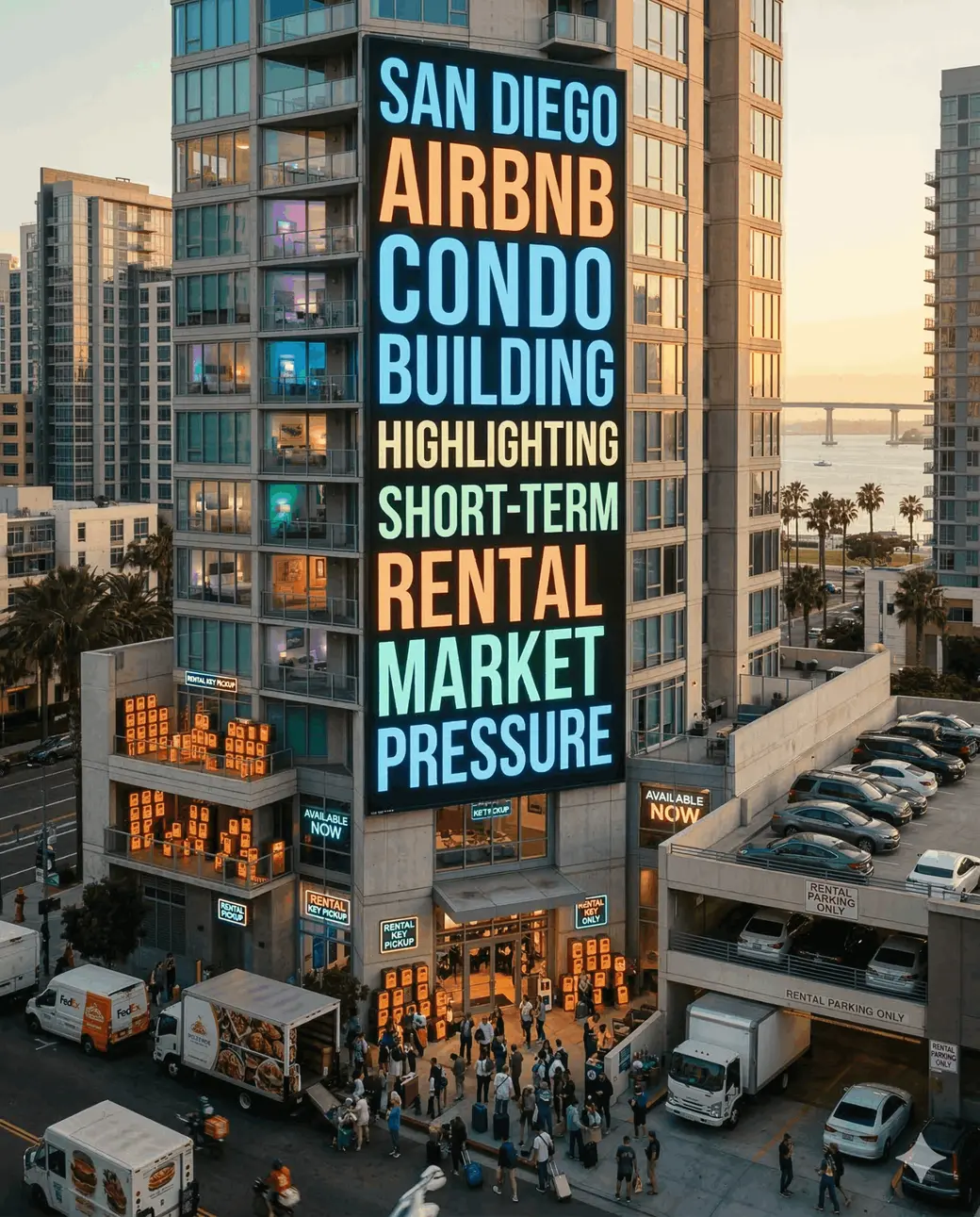
San Diego Airbnb owners are selling for a reason. This is not just burnout. It is a margin problem, a timing problem, and in many cases a regulatory risk problem. In the City of San Diego, short-term rentals require licensing, whole home operators face utilization rules, and hosts are competing in a market with more than 15,000 active listings. At the same time, travelers are booking later, comparing total price more aggressively, and expecting hotel level quality from independent operators.
For some owners, the math still works. For many others, it does not work as cleanly as it did two or three years ago. That is why more San Diego vacation rental owners are stepping back, rethinking the strategy, and in some cases selling to diversify.
San Diego Airbnb supply has exploded, and that changes the game
The clearest pressure point is competition. AirDNA shows 15,369 short-term rental listings in San Diego, with active listings up 8% year over year. That matters because more supply usually means more price competition, more vacancy risk, and less room for mediocre operations. Even in a market with decent occupancy, owners feel the squeeze when too many similar units chase the same demand.
This is where many owners get stuck. Their property may still book, but not at the rate they underwrote. They may have bought based on peak-pandemic assumptions, then watched the market normalize. Phocuswright describes the broader short-term rental market as one with heightened competition, shifting traveler behavior, and operational growing pains. That description fits San Diego well.
The local implication is simple: in neighborhoods like Mission Beach, Pacific Beach, Ocean Beach, and coastal condo-heavy pockets, owners are not only competing against nearby rentals. They are competing against professionally managed inventory with stronger cleaning systems, better photography, faster response times, and more aggressive pricing tools.
Guests are booking later because they know they have leverage
Late bookings are another source of stress. AirDNA reported in mid-2025 that U.S. short-term rentals were seeing rising supply, slower demand, and shorter booking lead times. Skift also reported a rise in late bookings, noting that in the U.S. 40% of hotel bookings in June 2025 were made within seven days of arrival. While hotel and short-term rental behavior are not identical, the direction is the same: consumers are waiting longer to commit.
Owners feel that shift immediately. A booking calendar that used to fill weeks in advance now fills closer to check-in. That creates three problems:
-
Pricing becomes reactive
-
Revenue forecasting gets weaker
-
Owners feel forced to discount to capture demand
Vacationers know they have options. When supply is high, waiting can create leverage. That means more last-minute booking requests, more price sensitivity, and more pressure on hosts to accept deals they would have rejected in a tighter market.
For owners with high mortgage payments, HOA dues, management fees, and cleaning costs, that volatility can turn a profitable asset into a monthly headache.
Airbnb’s fee and pricing changes are putting more pressure on margins
Airbnb’s pricing structure has become more visible to guests and, for some operators, more expensive to manage. In April 2025, Airbnb made total price display standard worldwide, so guests now see the total stay cost, including fees before taxes, earlier in the shopping process. That improves transparency for travelers, but it also makes high-fee listings easier to reject.
On the host side, Airbnb’s Help Center says that under its single-fee structure, most hosts pay 15.5%, with the full fee deducted from the host payout. That structure is mandatory for some categories of hosts, including traditional hospitality listings and hosts who use property-management software.
Why does that matter in San Diego? Because operators are already dealing with expensive turnovers, labor costs, maintenance, and frequent guest messaging. When the platform takes more of the economics, or when fees become more visible to guests, owners have less room to protect margin. Many respond by raising rates. The market often responds by clicking on a cheaper listing.
That is one reason some owners are selling now instead of waiting for conditions to improve.
San Diego regulation risk is real, and owners know it Find Your Investment's REAL VALUE
The City of San Diego’s STRO rules are a major part of this trend. The city requires a license for short-term rentals of less than one month. It also separates licenses by tier, with different rules for part-time use, home sharing, whole-home rentals outside Mission Beach, and whole-home rentals in Mission Beach. As of March 13, 2026, the city showed 4,691 Tier 3 licenses issued, 915 Tier 3 licenses still available, and 1,097 Tier 4 licenses issued with zero remaining available.
There is more. Owners with Tier 3 or Tier 4 whole-home licenses must use the property for short-term rental at least 90 days per year to maintain the license, and the city states there are no exceptions if they fall short due to cancellations or outside circumstances. Tier 3 and Tier 4 hosts also must submit quarterly reports.
That creates a real risk profile:
-
Compliance requirements are ongoing
-
License costs increased as of March 1, 2025
-
Mission Beach whole-home inventory remains tightly constrained
-
Falling short on utilization can jeopardize a license
For investors, uncertainty has a cost. Even when a property is performing, many owners do not want to build long-term plans around rules that can tighten, renew, or shift. In practice, regulation risk lowers the appeal of holding an asset purely for short-term rental income.
Guest expectations have gone through the roof
This is the factor many owners underestimate. Travelers now expect a short-term rental to deliver the polish of a boutique hotel and the flexibility of a private home. Phocuswright points to evolving guest expectations as one of the defining features of the sector’s current phase.
In practical terms, that means guests want:
-
Near-instant communication
-
Flawless cleaning
-
Better design and amenities
-
Flexible check-in
-
Consistent five star execution
The issue is not just bad reviews. The issue is labor. Every added expectation adds operational drag. Owners who self-manage feel chained to the app. Owners who outsource often watch management costs eat into returns. Either way, the property becomes less passive than they expected.
That is why many San Diego Airbnb owners are not selling because the asset failed. They are selling because the business attached to the asset became too demanding.
What are the solutions for San Diego Airbnb owners?
Not every owner should sell. But every owner should make a clear, numbers first decision. Here are the main paths.
1. Reposition the property and operate it better
Some properties can still perform if the operator improves the business. That may include better photography, sharper pricing, minimum stay adjustments, upgraded furnishings, or a more intentional guest experience.
This path makes sense when the property has:
-
A strong location
-
Healthy seasonal demand
-
Manageable carrying costs
-
Clear upside from better operations
The key is honesty. If the property only works with perfect execution, it may not be the right asset for an owner who wants passive income.
2. Shift from short-term rental to mid-term or long-term rental
For some owners, the solution is not selling. It is simplifying. A mid-term or long-term rental can reduce turnover, lower operating intensity, and produce steadier cash flow.
This strategy can help owners who:
-
Want less management friction
-
No longer want to deal with nightly guests
-
Need more predictable occupancy
-
Are concerned about short-term rental regulation
It may reduce top line income, but it can also stabilize the property and reduce the daily stress.
3. Sell the property and diversify
This is the solution many owners resist at first, but it is often the cleanest move. Selling allows an owner to unlock equity, reduce operational headaches, and diversify into assets that better match current goals.
That could mean:
-
Moving equity into a primary residence
-
Buying a lower maintenance rental
-
Exchanging into a different asset class
-
Reducing concentration in one high friction property
-
Holding more liquidity during an uncertain period
For owners who are tired of late bookings, fee pressure, guest complaints, and regulation risk, selling is not giving up. It is reallocating capital. In many cases, it is the most rational decision on the table.
This is especially true when the property has appreciated, the owner has substantial equity, and the income no longer justifies the work.
4. Sell before conditions force the decision
A lot of owners wait too long. They keep hoping for one more strong summer, one more pricing rebound, or one more year before rules change again. That delay can cost them leverage.
Selling from a position of strength is different from selling under pressure. Owners who act early usually have more options around timing, pricing, tax planning, and their next move.
What San Diego Airbnb owners should do now
If you own a vacation rental in San Diego, this is the moment to run the real numbers. Not the optimistic numbers. The real ones.
Look at:
-
Net income after all fees and turnover costs
-
Occupancy risk tied to shorter booking windows
-
License and compliance exposure
-
Time spent managing the property
-
Equity that could be redeployed elsewhere
If the property still fits your goals, keep it and optimize it. If it does not, selling may be the smarter move. FIND OUT YOUR INVESTMENT'S REAL VALUE here
FAQ: Why San Diego Airbnb Owners Are Selling in 2026
Why are San Diego Airbnb owners selling their properties?
Many San Diego Airbnb owners are selling because the short-term rental business has become harder to manage and less predictable. Rising competition, shorter booking windows, higher guest expectations, platform fee pressure, and local regulation risk have all made ownership more stressful. For some owners, selling now is a way to protect equity and reduce headaches.
Is the San Diego short-term rental market becoming oversupplied?
In many parts of San Diego, yes. More vacation rentals are competing for the same pool of travelers. That increased supply can push down nightly rates, create more vacancy gaps, and make it harder for average listings to stand out. Owners who relied on strong demand a few years ago are now facing a more crowded market.
Why are travelers booking San Diego Airbnbs at the last minute?
Travelers know they have more choices. When supply rises, guests often wait longer before booking because they expect discounts or better options closer to their travel dates. That puts pressure on San Diego Airbnb owners who need predictable occupancy and stable monthly income.
How do Airbnb fees affect San Diego vacation rental owners?
Airbnb fees can squeeze margins in two ways. First, platform costs reduce the owner’s net income. Second, guests are more sensitive to the total price than ever. When cleaning fees, service fees, and nightly rates combine into a higher total cost, some travelers move on to competing listings or hotels.
Are San Diego short-term rental regulations causing owners to sell?
For many owners, regulation risk is a major factor. Short-term rental rules in San Diego have added licensing, compliance, and operational requirements that some owners do not want to manage long term. Even owners who are compliant may choose to sell if they feel the regulatory environment has become too restrictive or uncertain.
What guest expectation changes are creating problems for Airbnb hosts?
Guests now expect a short-term rental to feel polished, fast, and nearly hotel-like. That includes cleaner homes, better design, faster communication, smoother check-in, and consistent five-star service. For many hosts, that means more time, more labor, and more money spent just to remain competitive.
Should San Diego Airbnb owners convert to a long-term rental instead of selling?
That depends on the owner’s goals. Converting to a long-term or mid-term rental can reduce turnover, simplify management, and create more predictable cash flow. However, some owners still decide to sell because they want to unlock equity, eliminate risk, or move their money into other investments.
When does selling an Airbnb in San Diego make sense?
Selling may make sense when the property is no longer producing enough profit to justify the work, risk, and stress. It can also make sense when the owner has substantial equity and wants to diversify, reduce operational demands, or reposition their portfolio before conditions worsen.
Can selling a San Diego Airbnb help an owner diversify?
Yes. Selling a vacation rental can free up equity for other uses, including buying a primary residence, moving into a lower-maintenance investment, or reallocating capital into other asset classes. For some owners, diversification is the smartest financial move, especially when one property has become too management-intensive.
What should San Diego Airbnb owners do before deciding to sell?
Owners should review their net income, occupancy trends, guest-related costs, local compliance burden, and equity position. They should also compare the current return from the Airbnb against other options like long-term renting or selling. A local pricing review can help clarify whether holding or selling is the better move.
Are certain San Diego neighborhoods more affected by Airbnb pressure?
Yes. Areas with strong vacation demand and high concentrations of short-term rentals often feel these shifts first. Coastal communities and neighborhoods popular with visitors can see sharper pricing pressure, heavier competition, and greater sensitivity to regulation changes than areas driven mostly by long-term housing demand.
Who should San Diego Airbnb owners talk to if they are considering selling?
They should talk to a local real estate professional who understands both investment property positioning and neighborhood-level demand. A strong local agent can help owners evaluate pricing, timing, buyer demand, and whether selling now supports their broader financial goals.
The bottom line for San Diego Airbnb owners selling in 2026
San Diego Airbnb owners selling today are responding to a market that has become more competitive, more operationally demanding, and more regulated. Supply is up. Booking windows are shorter. Fees are more visible. Compliance risk is not going away. Guest expectations keep rising.
For some owners, the answer is better management. For others, it is a move to long-term renting. And for many, the best solution is to sell the property and diversify while they still have strong equity and control over the timing.
If your San Diego short-term rental has become more work than it is worth, it may be time to evaluate an exit strategy based on today’s market, not yesterday’s assumptions. A property can be successful on paper and still be the wrong fit for your portfolio.
If you own an Airbnb in San Diego and are weighing whether to hold, rent long-term, or sell, a property specific equity and pricing review can show which option leaves you in the strongest position. Let's DISCUSS your situation and carve out what is the best for YOUR situation.
Chris Melingonis - The Realtor Dad

With almost two decades of experience in the real estate market, I have dedicated my career to helping families buy and sell homes in La Mesa and San Diego, California. My extensive knowledge of the local market allows me to provide valuable insights and guidance, ensuring my clients feel confident and informed throughout the entire process. I understand that real estate transactions can be daunting, which is why I prioritize education and clear communication to help my clients navigate even the most challenging situations.
My unique marketing plan is designed to get homes sold quicker and at maximum value. By leveraging cutting-edge technology and innovative strategies, I showcase properties in a way that attracts potential buyers and stands out in the competitive San Diego market. I am committed to using my experience to tailor my approach to each client's specific needs, ensuring a seamless experience from start to finish.
Whether you are a first-time homebuyer or looking to sell your cherished property, I am here to guide you every step of the way. My focus on building lasting relationships and providing exceptional service has earned me the trust of many families in our community. Together, we can make your real estate dreams a reality.
Recent Posts